Success Story | Upper Billabong Citizen Science
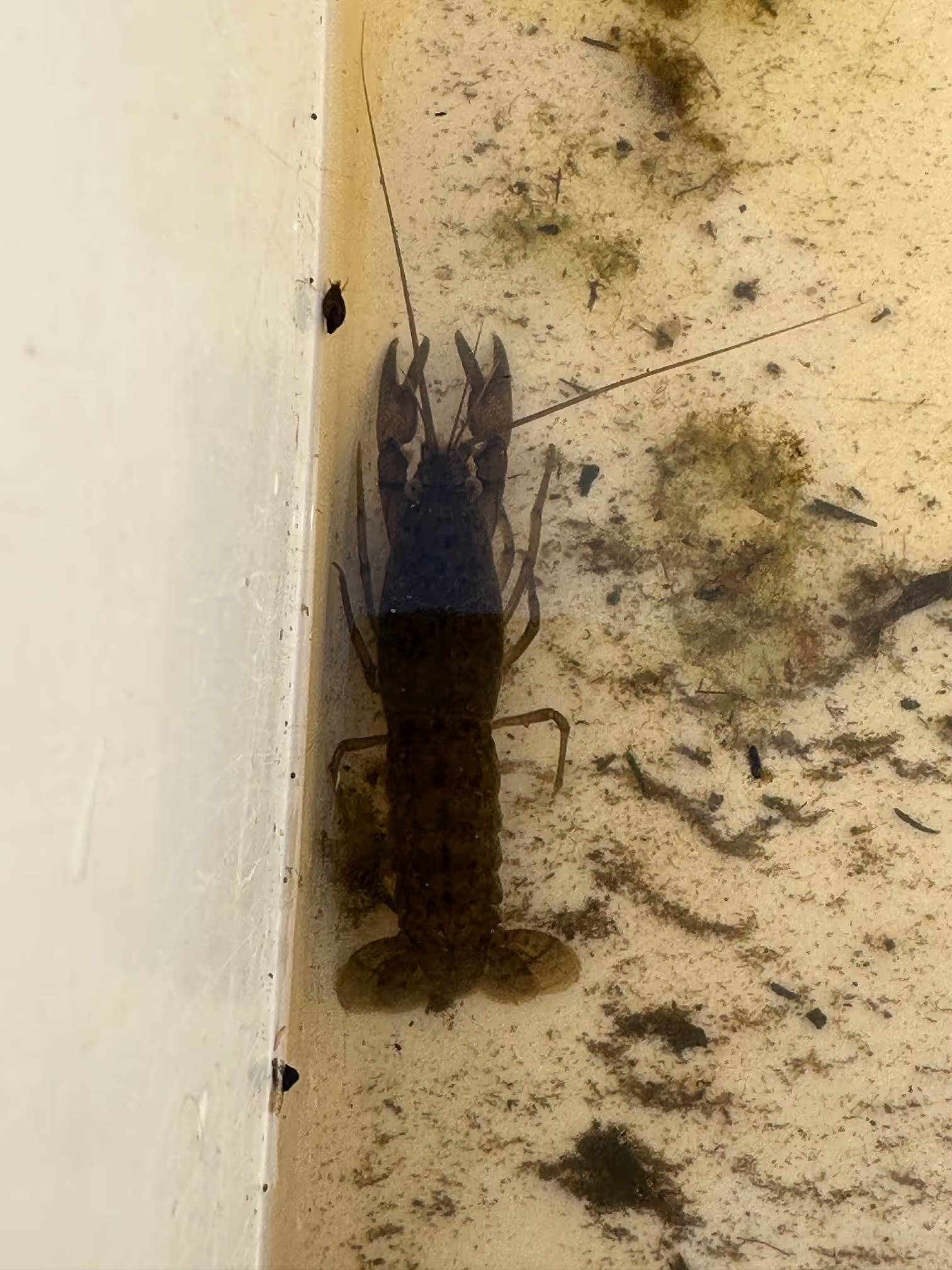
In 2022 as we drafted the Waterway Management Plan, we lacked information on the aquatic wildlife of the Upper Billabong catchment, aside from a few key species.
To improve our knowledge, we decided to focus on Citizen Science, utilising the Refreshing Rivers iNaturalist project and eDNA tests to build a better picture of aquaticand riparian wildlife. Within iNaturalist Refreshing Rivers, we have gathered 1,672 observations across the catchment and also completed 9 eDNA profiles in local waterways.
We also encouraged participation in the Great Southern Bioblitz in 2023 and 2025, adding over 600 observations across the two events, with 30 people attending a night walk at Ian Geddes Bushwalk, 21 people taking observations at Woomargama Common and more than 30 students attending from two local schools for a special event at Ian Geddes Bushwalk.
The gathered data is now being used to source propagation material for growing aquatic plant sods in order to revegetate instream environments to encourage the spread of aquatic plants within the waterways.
With the eDNA data collected, as part of the Natural Capital Profile assessment, we now have a detailed picture of the aquatic life within the Upper Billabong catchment. Testing in the Little Billabong has also located another Southern Pygmy Perch location, that was not previously known.
At this location, the landholder has fenced and revegetated two sites and installed offstream watering points on the creek to protect pools for the Southern Pygmy Perch. They report that without stock accessing the bank, these pools have continued to hold water during the recent drought conditions.
Information is power, and using citizen science techniques to increase our knowledge of thewildlife living in our waterways helps us understand what we are aiming to protect, where we need to maintain and increase biodiversity, and how to effectively restore our important water resources.